
Campusand facilities.
Academic,residentialandsupportfacilitiesacrossourVijayamangalamandCoimbatorecampuses:centrallibraries,researchcells,hostels,transportfleets,healthcare,sportsarenasandinnovationlaboratories.
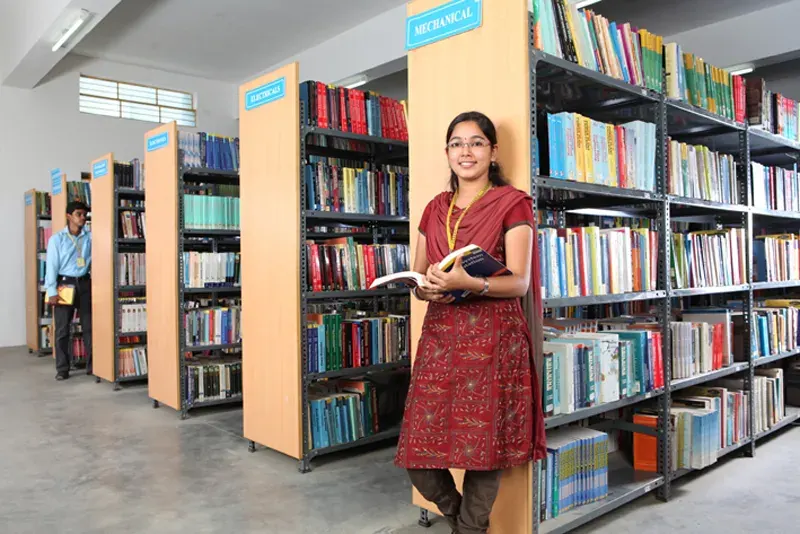
Central Library & Digital Hub
A collection of more than 46,000 volumes across 815 m² with 148 reading seats, and DELNET consortium access to scholarly databases and full-text journals.
Hostels
Separate on-campus hostels for boys and girls, with hygienic dining, Wi-Fi, and 24/7 security and discipline.
Campus Transport
A fleet of 12 GPS-enabled buses serving Tiruppur, Coimbatore, Erode and nearby areas within a 50 km radius.
Canteen & Dining
A 900 m² cafeteria seating 600, with hygienic multi-cuisine food, purified drinking water and modern cooking equipment.
Dispensary and Ambulance
A campus dispensary with inpatient beds, qualified medical staff, and an ambulance on standby 24/7.
24-hour ATM
An on-campus ATM, available to hostellers and day scholars alike.
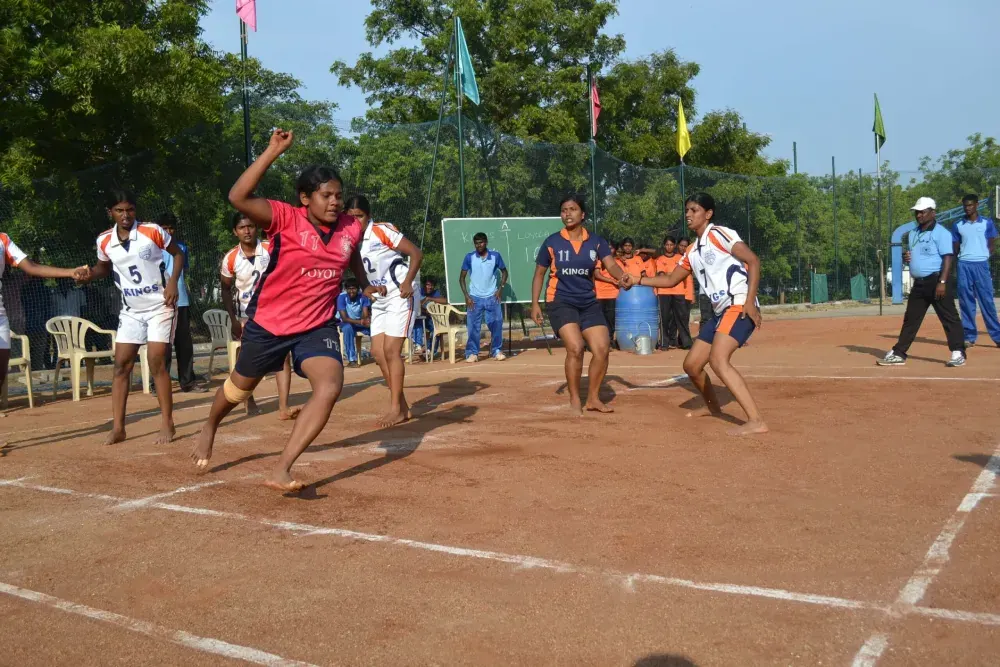
Sports and Gymnasium
Coaching in sports and athletics under qualified Physical Directors, with cricket, football, basketball grounds, gymnasiums and indoor sports halls.
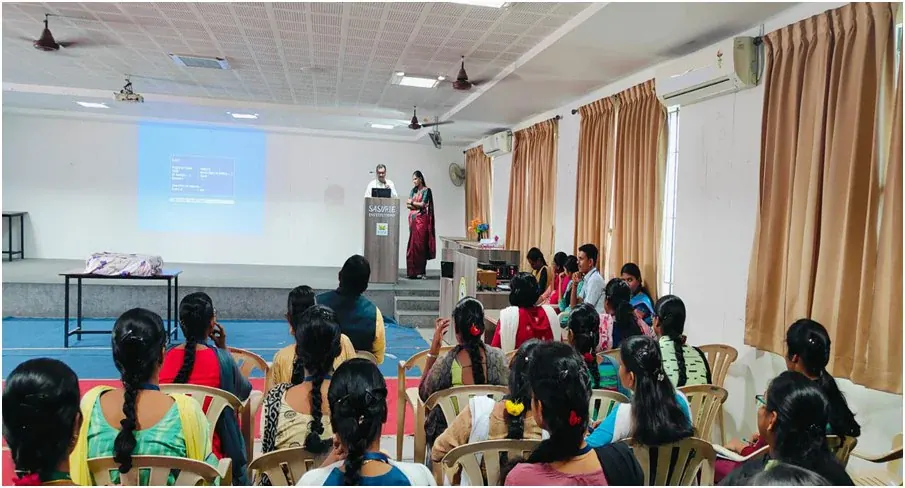
Seminar Halls & Modern Labs
Air-conditioned seminar halls, auditoriums, departmental laboratories, and high-performance computing centres with gigabit internet.
Incubation Centre
A platform for transforming student ideas into viable products and start-ups, with mentorship and networking opportunities.
Research & Development Cell (CFRD)
Set up to promote, coordinate and implement R&D programmes, funded research projects, Smart India Hackathons, and patent filings.
Connectivity, Power & Accessibility
Campus-wide high-speed Wi-Fi, solar power generation, backup generators, and barrier-free ramps and washrooms for differently-abled students.
Centres of Excellence & Industry Tie-ups
Centres of Excellence in Industry 4.0, IoT, automation, and IBM partnerships that give students hands-on exposure to emerging technologies.
CentralLibrary.
Thelibraryprovidesinformationservicesandaccesstodigitalandprintedresourcesfortheinstitutecommunity.Itshousekeepingiscomputerisedandrunonlibrarysoftware.
815 m², 148 seats
Open from 9:00 a.m. to 5:00 p.m. on all working days.
DELNET and NDL
DELNET consortium database subscription, with about 500 e-journals through DELNET and inter-library loan through DELNET and the National Digital Library. Students and faculty can also use e-books, e-journals and NPTEL video courses.
Collection
- Books: more than 46,000 volumes across basic sciences, engineering and technology, and humanities.
- Back volumes: 1,947.
- Theses: 1,799.
- Print journals: 66 national and 66 international.
- E-journals: 572 national and 140 international.
- Non-book materials: 3,661, with a digital library of CDs and DVDs and 10 desktops with internet access.
Services and sections
- Stock: books are shelved by subject on open-access shelves. Users can search by title, author or publisher on the OPAC, which shows shelf locations.
- Reference: encyclopaedias, yearbooks, dictionaries, directories, competitive-examination books, study-abroad guides, atlases and biographies.
- Circulation: issue, return, renewal and reservation are computerised with barcodes; students and staff carry barcode stickers on their ID cards.
- Technical processing: acquisition on requests from department heads, Dewey Decimal classification and AACR II cataloguing.
Borrowing rules
- Teaching staff: up to 10 books for 30 days; reference and non-book materials for 15 days.
- UG students: up to 3 books for 15 days; reference and non-book materials for 3 days.
- PG students: up to 3 books for 15 days; reference and non-book materials for 3 days.
IncubationCentre.
Trainingtodevelopbusinessskills:aplatformthathelpsstudentsturnideasintoproducts.
Objectives
- Build a culture of innovation on campus.
- Introduce students to start-ups and grow a lively start-up ecosystem on campus.
- Solve real-life problems through mentoring.
- Turn ideas into products and provide a platform for commercialisation at low cost.
Pre-incubation services
- Access to a modern product innovation centre with an internet-enabled lab.
- Help preparing business plans and setting up a company.
- Business skills training and mentor support.
- Product promotion and help obtaining financial support.
- Networking with entrepreneurs, customers and support agencies.
Research andDevelopment Cell.
Thecellsupports,coordinatesandcarriesoutresearchanddevelopmentprogrammes,andbuildstheinfrastructureandenvironmentthatencouragearesearchculture.
Objectives
- Improve the institute's research ability by encouraging staff to publish in reputed conferences and refereed journals.
- Develop research skills among faculty and students.
- Stay in touch with industry needs to produce new or improved products, processes, systems or services.
- Foster research creativity among students and faculty.
- Identify budgetary resources and assets to fund research.
Benefits
- Excellence in R&D, technology innovation and business start-ups.
- An interdisciplinary culture, ethical research conduct and compliance.
- Knowledge and technology transfer with government agencies, research institutions and industry.
- Strong scientific results, well-managed projects and grants, and answers to regional economic and societal challenges.
Outcomes
- Better-quality UG and PG projects.
- More research proposals, publications and patents.
- Student awareness of recent advances in technology.
- Interaction with industries and research institutes.
- Improved student placements.